
Plan outlines strategies to improve service long-term; addresses flooding, extreme temperatures, and severe weather across MBTA assets
From the MBTA: The Massachusetts Bay Transportation Authority (MBTA) earlier this week released its first-ever systemwide Resilience Roadmap, a comprehensive plan to strengthen transit infrastructure and prepare operations against the impacts of climate change and severe weather, including flooding, extreme heat and cold.
Developed as a key next step following the MBTA’s release of the 2024 Climate Assessment, the Roadmap outlines both near- and long-term strategies to proactively reduce climate risks and improve reliability across the transit system. The plan spans all modes of transit and prioritizes investments that protect critical assets, support safe operations, and minimize service disruptions.
The MBTA’s Resilience Roadmap directly supports goals laid out in the Healey-Driscoll Administration’s program, ResilientMass, which is strategically designed to help communities across the state mitigate the negative impacts of severe weather like heatwaves and flooding.
“The MBTA is always looking for ways to proactively address climate resilience,” said Interim Secretary and General Manager Phillip Eng. “Our riders deserve safe, reliable, and robust service now and in the future, which is why this Resilience Roadmap is impactful. I’m thankful to the many MBTA teams, experts, and advocates who helped us map out a plan to protect our system and assets.”
“Building climate resilience is essential to keeping our transportation system safe and reliable. Much of our infrastructure wasn’t built for heavier rainfall, more frequent storms, and heat waves—conditions that can cause flooding, damage, and service disruptions,” said Energy and Environmental Secretary Rebecca Tepper. “The MBTA’s roadmap targets practical upgrades to strengthen reliability and safety and plays an important role in advancing the ResilientMass program, which works to prepare infrastructure for today’s conditions and the future.”
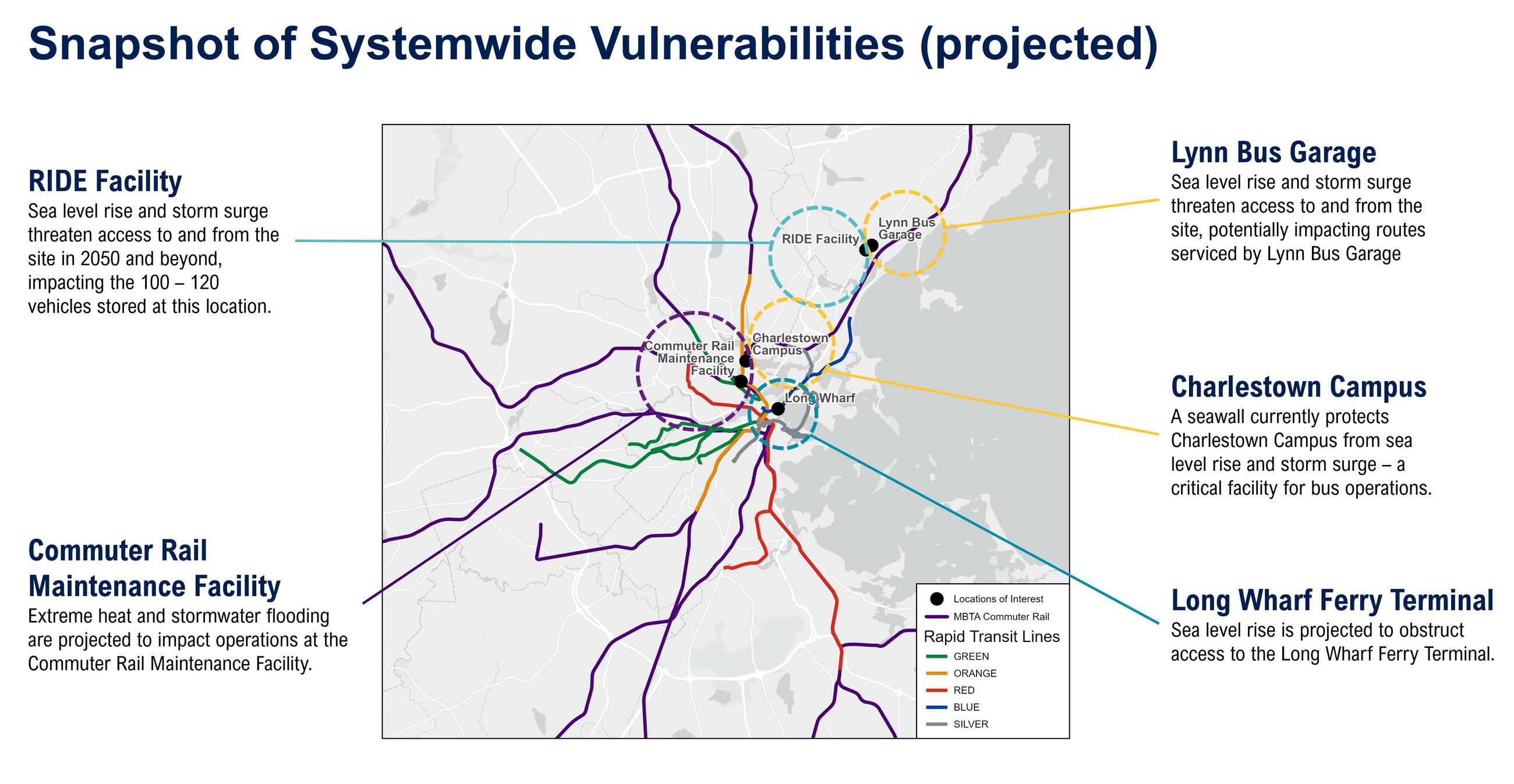
The data-driven plan was developed from expertise across the MBTA, more than two dozen climate vulnerability studies, site assessments across the system, and best practices from peer transit agencies nationwide.
The Roadmap focuses on nine priority areas, including but not limited to:
- Investing in the resilience and reliability of the power system
- Protecting tunnels and stations from flooding
- Reducing heat exposure for riders and employees
- Improving the resilience of signal and communications systems
- Addressing flooding at stations and support facilities
- Upgrading tracks and facilities to withstand extreme temperatures.
In total, the plan identifies 30 new resilience strategies, with 23 recommended for action within the next five years. Each strategy identifies the climate risks addressed, potential locations, responsible departments, and the estimated cost ranges for each project.
Projects and actions would include but are not limited to
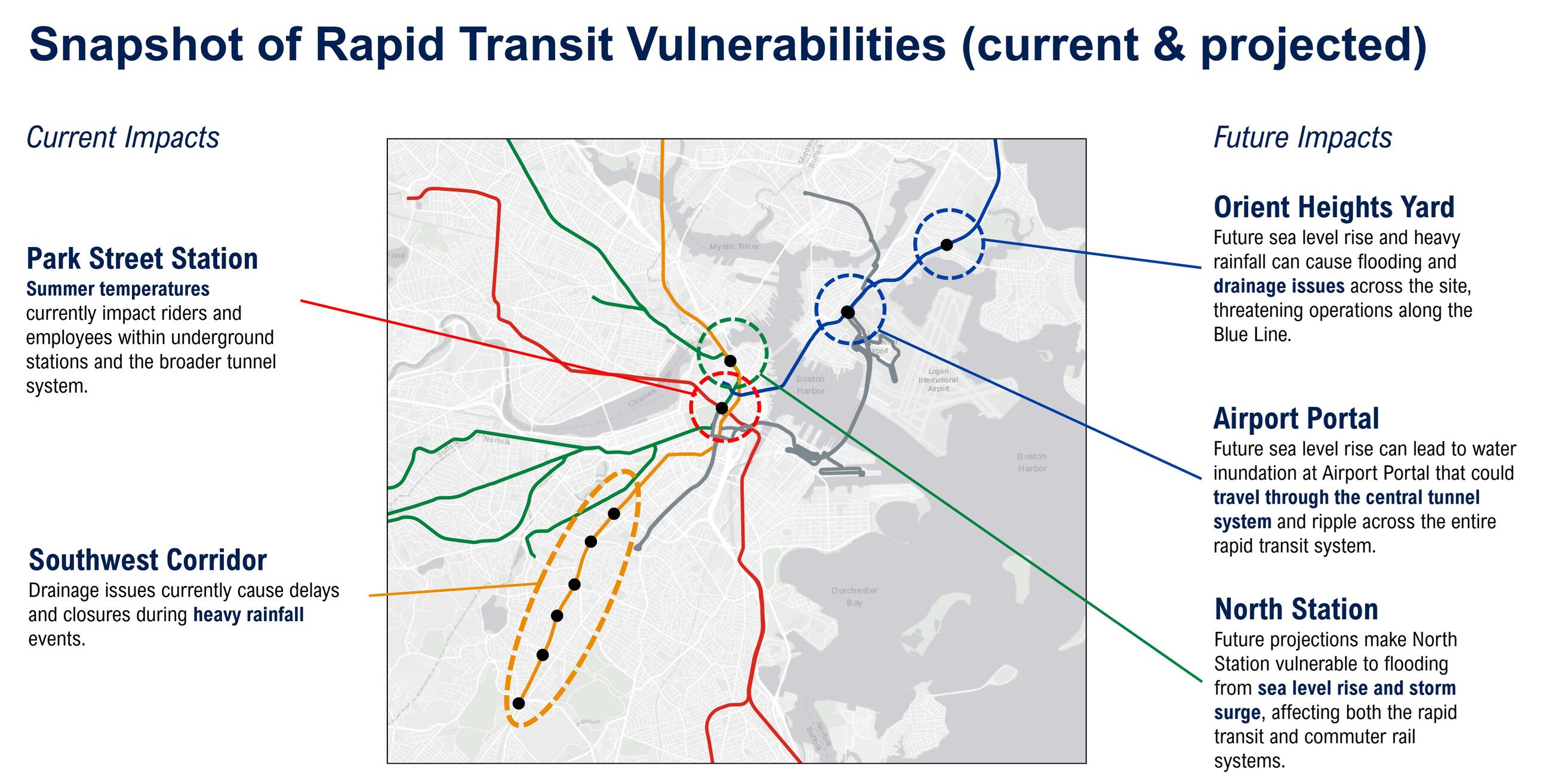
- Bolstering weather resilience within the Blue Line Airport tunnel portal, which includes installing hinged portal doors to protect from flooding that would lead to widespread infrastructure, operational, and economic impacts across the subway tunnel system.
- Expanding shade at stations and bus stops with high heat exposure to protect riders
- Incorporating permanent or deployable flood protection systems at vulnerable stations
- Installing cooling equipment in signals and applying communications modernization upgrades to protect critical equipment from extreme heat
- Expanding access to heat safety training and personal protective equipment for MBTA workers
- The Roadmap also emphasizes the need for sustained capital investment, internal knowledge sharing, and regional collaboration to advance this work.
The MBTA will continue working closely with municipal, regional, and state partners to implement the strategies identified in the Roadmap and adapt to evolving climate conditions over time.
This work builds on the MBTA’s vision of building a more resilient transit network. Key recent investments towards a decarbonized and more resilient system include:
- $10 million towards upgrading pump rooms along the Blue Line to increase resiliency to flooding
- $15 million for the construction of new bus amenities and shelters across the system to provide relief to riders during extreme heat or heavy rain events
- $1 million ResilientMass grant to the design of flood protection for the Blue Line Airport tunnel portal.
For more information, please visit mbta.com or connect with the T on X @MBTA, Facebook /TheMBTA, Instagram @theMBTA, Threads @thembta, or TikTok @thembta.
About the Massachusetts Bay Transportation Authority
The Massachusetts Bay Transportation Authority (MBTA) opened America’s first subway tunnel in 1897, pioneering public transportation in the United States. Today, the MBTA is one of the largest public transit systems in the country, operating an extensive network of subway, bus, Commuter Rail, ferry, and paratransit services across 176 cities and towns. The MBTA is undergoing a transformative period, focusing on cultivating a culture of safety and excellence, modernizing infrastructure, and improving reliability and accessibility. Current priorities include accelerating critical infrastructure repairs, expanding accessibility, and reducing emissions. The MBTA is committed to providing dependable, frequent, and accessible service that riders can rely on while supporting the region’s economic vitality. Through initiatives like the unprecedented Track Improvement Program, the Better Bus Program, and the Rail Modernization Plan, the MBTA aims to connect communities and improve riders’ daily experiences and trips. For questions or assistance, riders are encouraged to contact the MBTA Customer Center at 617-222-3200. Members of the press are encouraged to contact mediarelations@mbta.com. For the latest updates on MBTA services, projects, and initiatives, visit MBTA.com or follow @MBTA on social media.
If you have a news story that you would like to share, please contact us via email or call 781-780-9460.
What I Am Reading Now: Live With Purpose | October 19, 2026
My Sister Was My Lifeline: Four Lessons on Faith, Love, and Relationships In this heartfelt episode of What I’m...
Lynn Water & Sewer Commission Meeting | October 19, 2026
The Lynn Water & Sewer Commission Meeting held at 400 Parkland Ave. in Lynn on October 19, 2026. It...